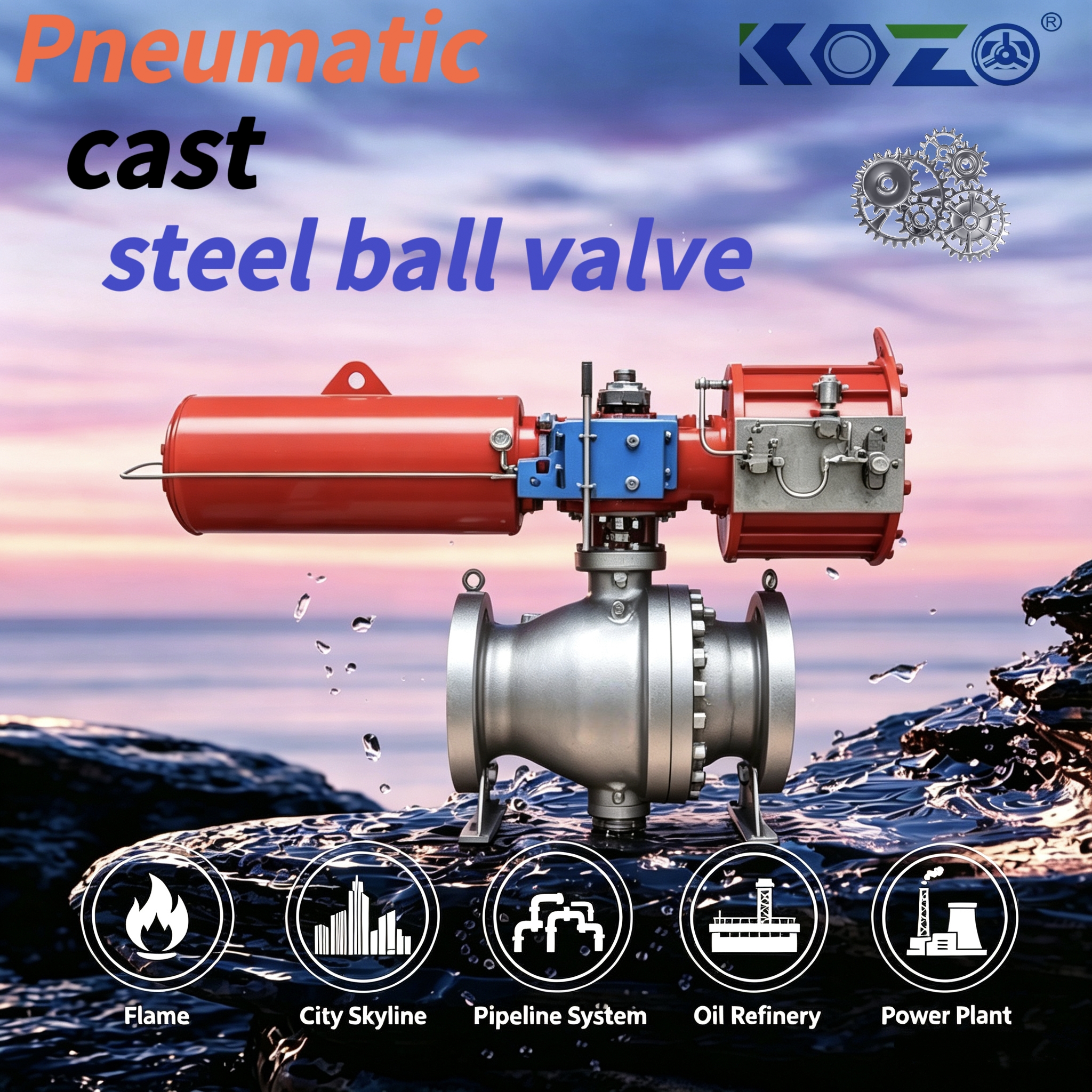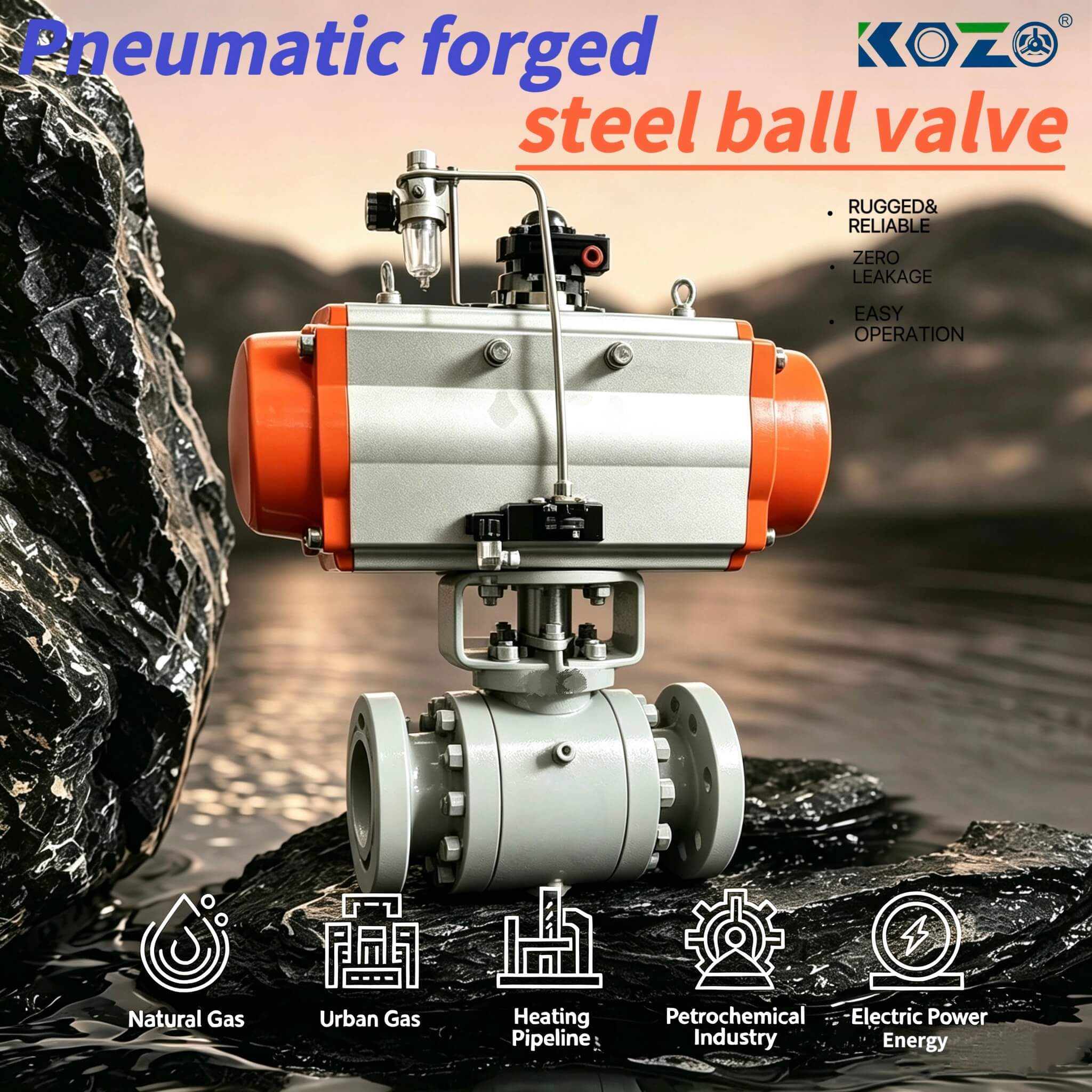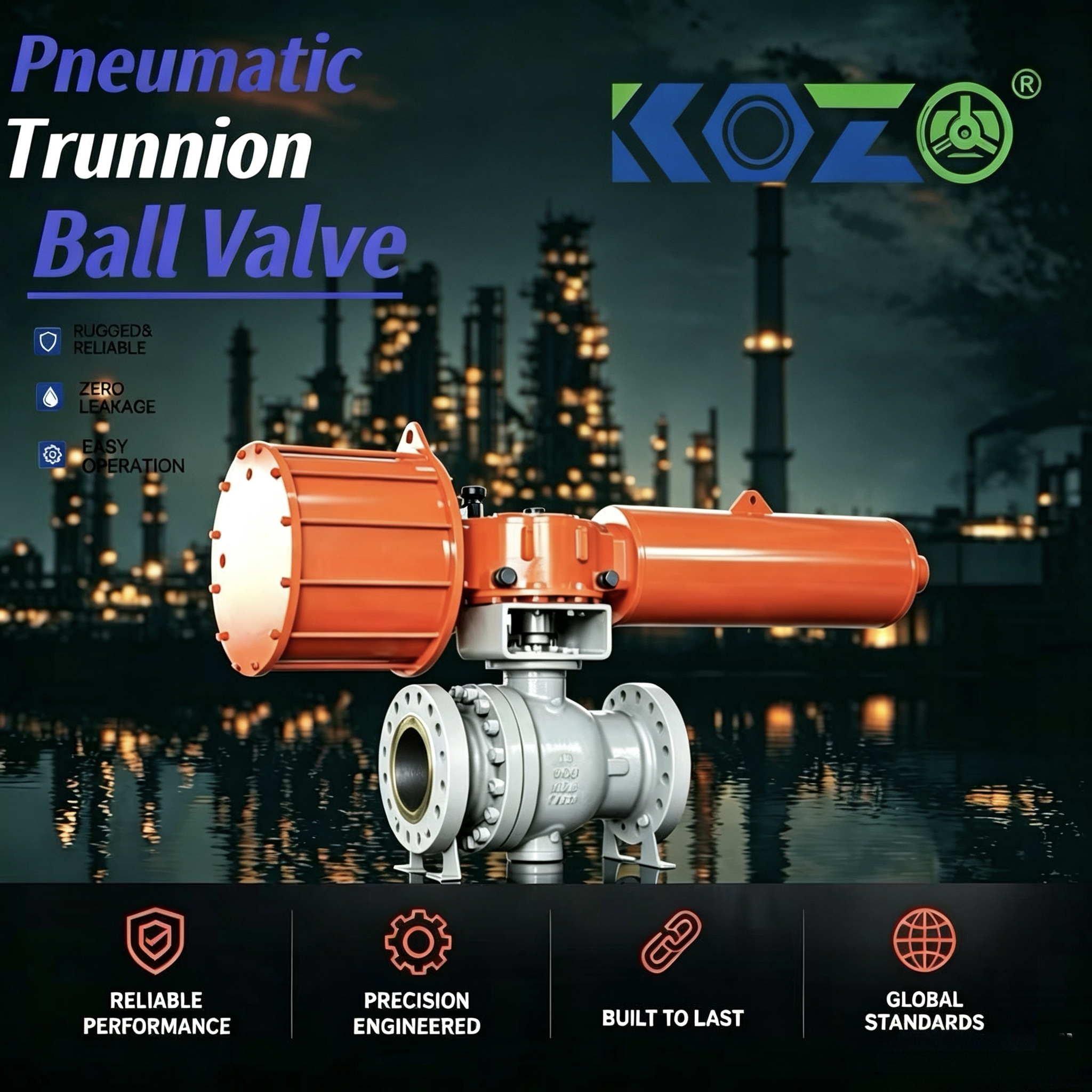
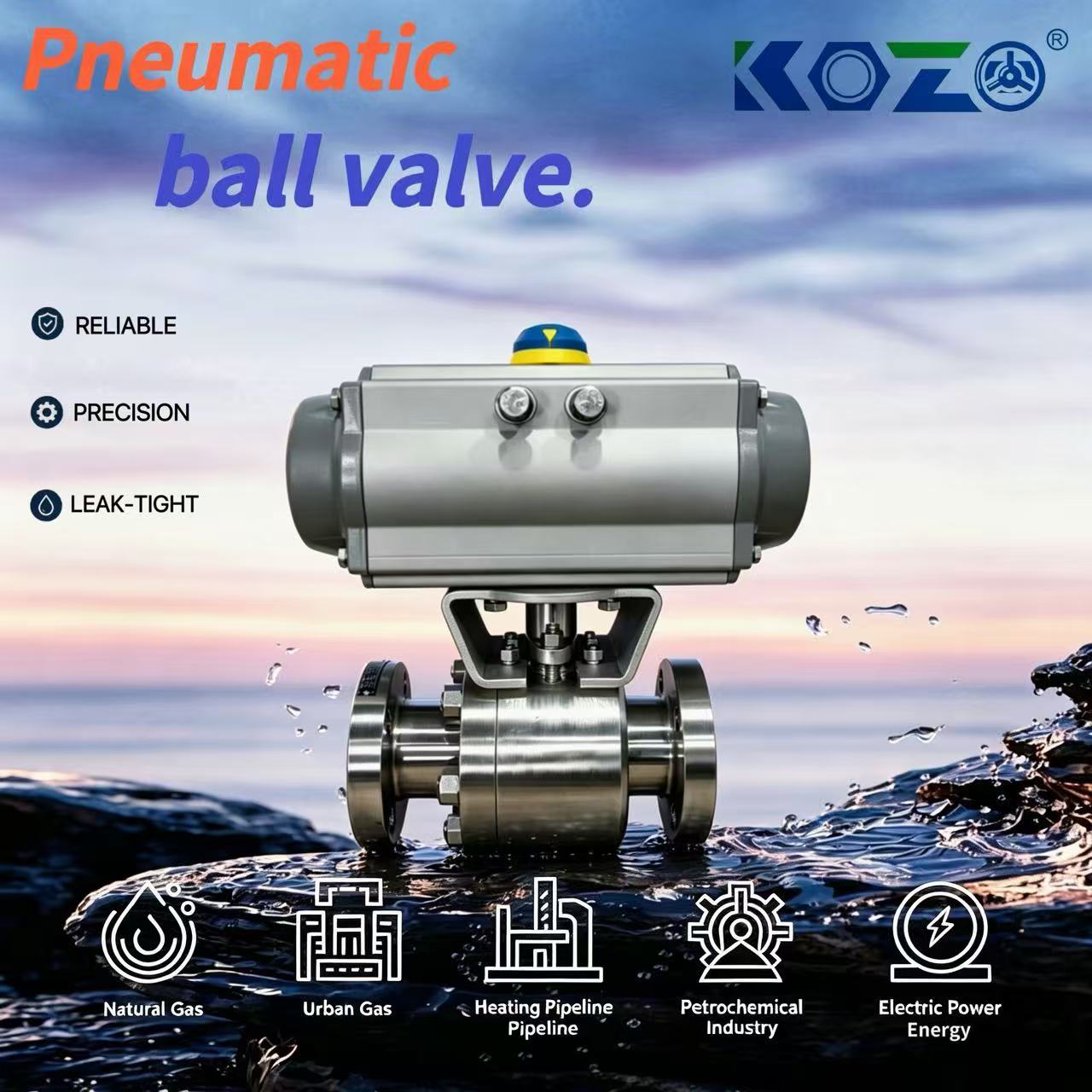
Stainless steel pneumatic floating ball valve
Applicable Standards:
Ball Valve Design Standards: API 6D, BS 5351, ASME B16.34
Face-to-Face Dimensions: ASME B16.10, API 6D
Flange Standards: ASME B16.5 / ASME B16.47
Butt-Weld End Standards: ASME B16.25
Fire Safe Testing: API 607, API 6A
Inspection and Testing Standards: API 598, API 6D
Design Features:
Structure: 2-piece or 3-piece body design
High-integrity sealing structure with low operating torque
Double Block and Bleed (DBB) function
Cavity self-relief mechanism
Fire-safe design
Anti-blowout stem
Anti-static design
Locking device (for lever-operated valves)
ISO 5211 actuator mounting pad
Emergency sealant injection function
Application Fields:
Oil & Gas: Wellhead equipment, pipeline pigging stations, storage tank inlets/outlets, oil and natural gas transmission
Chemical Processing: Reactor isolation, toxic media transport, high-pressure process lines
Energy & Power: Power generation, boiler fuel shut-off, main steam line isolation
Special Applications: Subsea pipelines, LNG facilities, strategic reserve depots
Brand: KOZO
Valve Materials: Carbon steel, high-temperature Cr-Mo steel, stainless steel, duplex stainless steel, Monel, aluminum bronze, special alloy steels, etc.
Valve Type: KOZO Ball Valve
Valve Testing: 100% tested prior to delivery
Warranty: 18 months after shipment or 12 months after installation (whichever occurs first)
Valve Structure: Trunnion-mounted ball valve
Size Range: 1/2" to 48"
Pressure Class: ASME Class 150, 300, 600, 900, 1500, 2500
Lead Time: 15 – 30 days
Samples: Samples available upon request from KOZO Valves
Valve Color: Customized according to customer requirements
Packaging: Plywood crates
Minimum Order Quantity (MOQ): 1 set
Country of Origin: Zhejiang, China (Mainland)
Shipping Port: Shanghai or Ningbo
Payment Terms: L/C, D/P, T/T, Western Union
Stainless steel pneumatic floating ball valve - A fail-safe quick-acting sealing solution for medium and small diameter corrosive and wide temperature range working conditions
Design concept
The austenitic stainless steel is used as the pressure-bearing shell, and its corrosion resistance and wide temperature range characteristics are utilized to cover harsh media. The ball is not equipped with a fixed ear shaft. After closing, the medium pressure pushes it towards the downstream valve seat, and the sealing force automatically increases with the pressure difference. The pneumatic actuator is standard-equipped with a single-acting spring return function, which automatically returns to a safe position when air or power is cut off. Core logic: Utilizing stainless steel to deal with corrosion and extreme temperatures, achieving reliable bidirectional sealing with a simple floating structure, and realizing intrinsically safe rapid emergency shut-off with pneumatic spring reset, it provides an automated isolation component with a simple structure, rapid response, and low cost for corrosive, cryogenic, and high-purity small and medium-sized diameter pipelines.
Performance advantage
· Wide temperature range application: Austenitic stainless steel has no ductile-brittle transition temperature, maintaining toughness and strength throughout the entire temperature range from -196°C to 538° C. One valve covers deep cold to high temperature.
· Corrosion resistance: F316/CF8M contains molybdenum, which is resistant to chloride ion pitting and various acid, alkali and salt chemical media, making it suitable for harsh environments such as chemical engineering and Marine applications.
· Fail-safe reset: Single-acting cylinder spring reset. When the air source or power supply is interrupted, the valve automatically closes or opens, naturally meeting the logic requirements of ESD emergency shut-off.
· Quick opening and closing: The full stroke time can reach the 1-second level, far superior to electric heads, making it the preferred drive for emergency quick closing conditions.
· Pressure self-tightening seal: When closed, the thrust of the medium pushes the ball towards the downstream valve seat. The sealing specific pressure automatically increases with the pressure difference, making the seal more reliable under high-pressure conditions.
· Bidirectional zero leakage: Symmetrical structure, meeting API 598 high-pressure gas seal zero bubble acceptance, reliable bidirectional off from low pressure to full pressure.
· Excellent low-pressure sealing: The elastic sealing ring or pre-tightening spring on the back of the valve seat provides the initial sealing force, enabling airtight shut-off even under extremely low pressure differences.
· Full bore zero pressure loss: The ball hole is the same as the inner diameter of the pipe, with nearly zero flow resistance, allowing it to pass through the pigging machine.
· Simple structure: No ear shafts, bearings or complex piston valve seats. The number of components is about 60% of that of fixed balls. Maintenance is simple, and it is small in size and light in weight.
· Intrinsic explosion-proof safety: Powered by compressed air, it poses no risk of electrical sparks and is directly applicable to explosion-proof areas in the chemical industry, with extremely low explosion-proof costs.
Safety performance
· Fault safety: Single-acting spring return, automatic on/off in case of gas source interruption, meeting SIL 2/SIL 3 safety integrity loop requirements. It can be equipped with a quick-release valve to further shorten the reset time.
· Anti-blowout valve stem: The valve stem is installed from the inside of the valve body, with an inverted sealing step at the bottom. Even when the cover is completely loosened, the valve stem will not be blown out by the medium pressure, meeting the mandatory requirements of API 608.
· Fireproof structure optional: Configurable primary non-metallic seal + graphite secondary seal, certified by API 607/6FA.
· Anti-static electricity conduction: The resistance between the ball, valve stem and valve body is ≤10Ω, and static electricity is conducted away in time.
Note on the pressure in the middle cavity: The liquid trapped in the middle cavity of the floating ball may abnormally increase pressure due to thermal expansion. It is recommended that in situations prone to temperature rise, a ball with a pressure relief hole or an additional middle cavity discharge valve be selected.
· Fire and explosion-proof actuator: Solenoid valves and limit switches can be optionally equipped with Ex ia/Ex d explosion-proof certification.
Applicable working conditions
· Medium: nitric acid, acetic acid, alkaline solution, seawater, LNG, liquid oxygen/liquid nitrogen/liquid argon, media containing chloride ions, high-purity chemicals, food-grade materials
· Scenarios: ESD cut-off of branch pipelines in chemical plants, remote switch of instrument pipes on offshore platforms, air separation sampling systems, automatic control of food and pharmaceuticals, emergency cut-off of branch pipelines during loading and unloading of LNG tank trucks
· Drive: Pneumatic single-acting spring return/double-acting; Rack and pinion type
· Selection boundary: For high-pressure large diameters above DN150 or Class 600, it is recommended to upgrade to a stainless steel pneumatic fixed ball valve